



Less than two decades removed from a devastating Civil War, the U.S. was in the process of becoming a burgeoning industrial power blessed by vast natural resources at its disposal.
While Andrew Carnegie and other powerful industrialists of the time get the majority share of historical credit for this movement, it was built off the literal backs of working class people. Employees regularly put in 12-hour days, six or seven days a week, with no legal protections whatsoever.
Get hurt on the job? Tough luck. Die on the job? Really tough luck. Hope your family has a good support system.
Peter J. McGuire and Matthew Maguire each are credited by some with proposing a workers’ holiday in New York City in 1882, and which of them actually originated it is still disputed. What isn’t disputed is that the first workers’ holiday in New York City ran this week in 1882.
Five years later, Oregon became the first state to make it an official holiday. Federal recognition came in 1894, driven in part by the Pullman Strike when 13 workers died during demonstrations.
Since Federal recognition, Labor Day has been a quieter cousin of May Day (President Grover Cleveland deliberately chose the former because it was too closely associated with socialism).
In the more than a century since Labor Day became a national affair, things have objectively improved for the American worker. And while it has been a positive for the average employee, I don’t think anyone would dispute that having a protected and empowered workforce has been pretty good for businesses as well.
While upward progress looks consistent in eyes of history, reality had it’s share of ups, downs, and sideways for the American worker as they asserted themselves. The workforce got more diverse, yet protections came later for those who don’t look like, well, guys like me.
And if it feels like I’ve been telegraphing the AI point (get it? 1880s? no?), I would say the problem started much earlier.
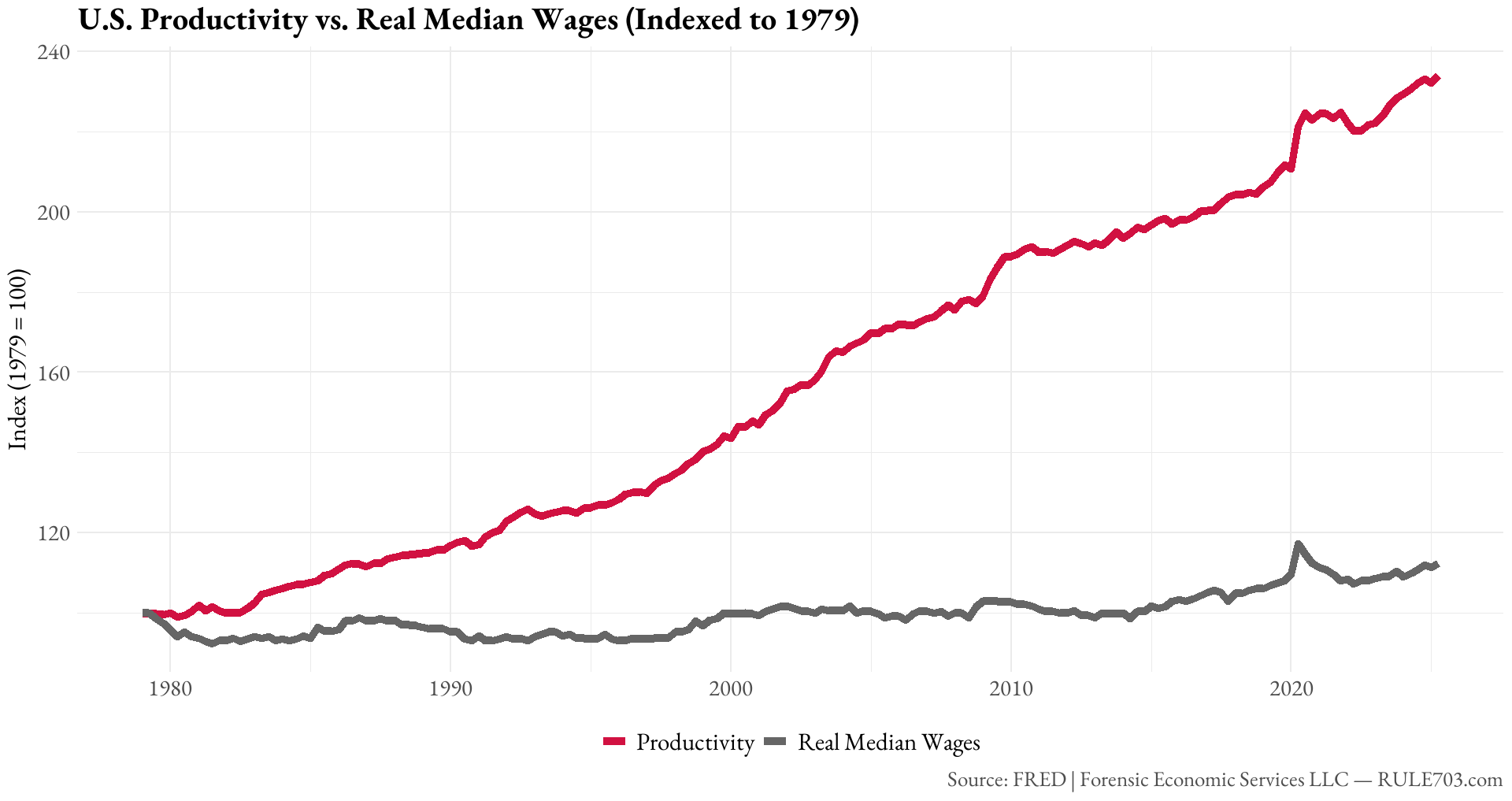
Nearly a century after those first Labor Day movements, the connection between the success of organizations in producing more and the workers getting their rewards from that production have grown more and more disconnected.
AI, I would argue, is simply the latest trend that will widen the gap between productivity and median wages.
It’s not going away any time soon. The Indeed Hiring Lab AI-postings tracker shows the share of U.S. job postings mentioning AI terms rising from 1.9% in January 2024 to 6.3% as of late July 2026.
A decade or more ago, white collar employees could look at workers’ rights movements as primarily a blue collar or frontline worker concern. Being detached was easy. Sure, technology continued to progress. But could technology really write a book, do data analysis, or create complex software.
Turns out it could.
While the true impact on jobs is still being figured out, the new labor movement is taking shape. Some are adjusting to new technologies while advocating for fairer treatment and reduced hours. Some reject automation and choose to execute work without the help of AI. Other novel solutions, like universal basic income, are being considered by a diverse group of people (including 11 Nobel Prize Winners).
Even if you have a healthy detachment from work, you can certainly see the value of labor as a concept and why workers deserve a share of it when things improve. And even billionaires, who seem more detached from reality by the day, can see the value of labor (even if they personally do not go out of their way to do things within their power to appreciate it).
After all, if AI takes all of our jobs, who is going to buy the stuff that they want to sell you?
Do we need a fresh view on Labor Day or are we content just rolling out the old charcoal grill, burning our favorite tube meat, and drinking the finest American domestic swill while we look ahead to cooler days and a long winter? It shouldn’t seem too anti-American that our collective success isn’t driven by a small group of very rich folks and that more of us are dependent on each other doing well too.
What else is going on this week?
Bootstraps Sneak Peek & BIG Conference Kickoff. A Portland preview of “Bootstraps,” a decade-in-the-making documentary on what UBI actually looks like for the people who lived it, kicks off the BIG Conference on September 16. I’ll be there, and so will Laurie Ruettimann, who’s hosting.
The Best HR & People Analytics Articles of August 2026. My own column on Uber’s AI budget made David Green‘s five-piece stack on why token spend isn’t the same as business value, one entry in his usual pile of dozens of links.
Hugging Face Hack Could Indicate Cultural Issues at OpenAI. OpenAI’s postmortem on the Hugging Face hack documents employees flagging a rogue AI message board twice before the attack, but never asks why leadership let it slide both times. Zvi Mowshowitz‘s answer: the company’s safety culture is either missing or too weak to matter.
I Let Grok Bot Apply to Software Engineering Jobs While I Was Sleeping. Bobby Hall Jr scheduled Grok Bot to search, score, and auto-apply to software engineering jobs every four hours while he slept, capped at ten applications so it wouldn’t chase quantity over fit.
Has AI Become the Solution and the Problem in the Hiring Process?. 73% of HR pros say they’ve now seen fabricated or misleading candidate information, which is Mikaela Cohen‘s version of AI cutting both ways in hiring.
It’s the Buyout, Stupid: What Workday’s Earnings Actually Tell Us. Steve Smith gave us his read on Workday beating every number and still dropping 5% the day Salesforce and ServiceNow popped: investors weren’t grading the quarter, they were grading the unconfirmed Silver Lake buyout rumor sitting on top of it.
AI Governance 5: Aderit.ai Wrapup. Five posts into his AI governance series, John Sumser lands on the plainest description yet of why HR has no real system of record: every function keeps its own version of the data, and nobody reconciles them.
Beyond the Spreadsheet Summit. Anne Fulton opens Fuel50’s Beyond the Spreadsheet Summit arguing workforce transformation is a decision-making problem before it’s a technology one.
Deloitte to Pay $21.5M to Settle Claims Its DEI Programs Violated Federal Civil Rights Law. Deloitte will pay $21.5 million to settle a suit over DEI hiring goals tied to race and sex, with the whistleblower money going to the American Alliance for Equal Rights (helluva name for an anti-DEI org).
AI and the Writing Profession. Michelle Rafter shared a follow-up survey on AI and the writing profession, and anyone who fills it out gets the report when it publishes later this year.
The Real AI Advantage Isn’t Speed of Adoption. It’s Workforce Readiness.. Nearly 40% of employees say they’re concerned about AI, and Katie Carroll flags the worse number underneath it: close to half say their employer has left them to figure it out alone.
HR in 2030: Half the Headcount and Three Times the Impact. 13% of HR roles are routine enough that AI just absorbs them, another 60% get elevated by it, and Kathi Enderes is already running workshops built around that split.
The Open Sourcer Folder. Amybeth Quinn keeps a public folder of every deck and resource she’s built for talent sourcing conferences, and the latest addition covers how to show your worth as a sourcer.
Everything You’ve Ever Typed at Work Just Became an Asset. A nice companion piece to my take on Google trying to buy employee data, if your idea of nice is Sharon O’Dea telling you to really watch what you write at work.
Are Your People Silent and Stressed? Work-Life Integration Can Help. Work-life pressure ranked among the top concerns in 32 of 47 countries surveyed, and Donald Thompson‘s read is that it’s a manager-relationship problem before it’s a workload problem.
Why AI Is Making Onboarding the Most Important HR Investment of the Decade. Only 12% of employees say their company nails onboarding, and Dan Schawbel‘s point is that AI has made it worse: new hires can no longer learn the unwritten rules from colleagues who are themselves still figuring out the new workflows.
Indeed Wants Your Recruiting Budget, Not Just Your Ad Budget. David Manaster digs into Indeed’s earnings call: 30% revenue growth even as job postings fell 4%, and now a direct pitch to CFOs to cut recruiters and agencies instead of buying more job posts.
The Superpower of Attention. Digital workers switch apps roughly 1,200 times a day, and Brian Fink cites research putting the refocus cost of a real interruption at up to 23 minutes, nearly five working weeks a year gone to reorienting. His fix: close the tabs.
From Headcount to Capability: Rebuilding Talent Acquisition for the Disaggregated Firm. Large corporations exist because coordinating work through the open market used to be expensive, and Kevin Wheeler argues AI has eroded that cost enough that talent acquisition needs rebuilding around a small core and a flexible outside network.
The Edge of Now Episode 5: AI Should Come for Your Org Chart. But Have You Earned the Move?. Jason Averbook and Jess Von Bank open their new podcast arguing that eight executives leaving Expedia in an “AI-driven shakeup” was actually a redesign, not a cut.
Are You Operating Like a Contractor or a Consultant, or Something Else?. John Vlastelica has watched recruiters get called contractors, then consultants, now architects, and argues AI is eating exactly the contractor-shaped work: sourcing, outreach, scheduling, and reports. What’s left is judgment, and judgment is what justifies the salary.
Smart Glasses Are Back! Time to Grade My Predictions.. Grading her own 2013 predictions on smart glasses, Anita Lettink found Meta has sold eight million pairs of exactly the tech she warned about. Her advice hasn’t changed: get a policy in place for what she calls the “pervert glasses” walking into meetings.
How to Respond to an AI Bot Interview. Kat Kibben‘s fix for AI interview bots is blunt: over-explain everything, because a human can ask a follow-up and a machine can’t.
Where Hiring Is Heading, in Five Guides. Matt Alder distilled 800-plus podcast episodes into five topic guides on where hiring is actually heading, from AI adoption to what employer branding means once candidates ask an LLM about you first.
Back in My Day. Robin Schooling‘s take on “back in my day” workplace nostalgia leans on a psychologist who’s studied it for decades: the feeling isn’t really about the landline or the cheese in a can, it’s proof the person you were and the person you are now are still the same one. I’ll take that.
Have a great rest of your week!