



“Now tell them we value our employees while laying a quarter of them off via e-mail.”
A meme circulating around based on a scene from The Truman Show is hitting on something we’ve all experienced: the world conspiring against us in a very specific way.
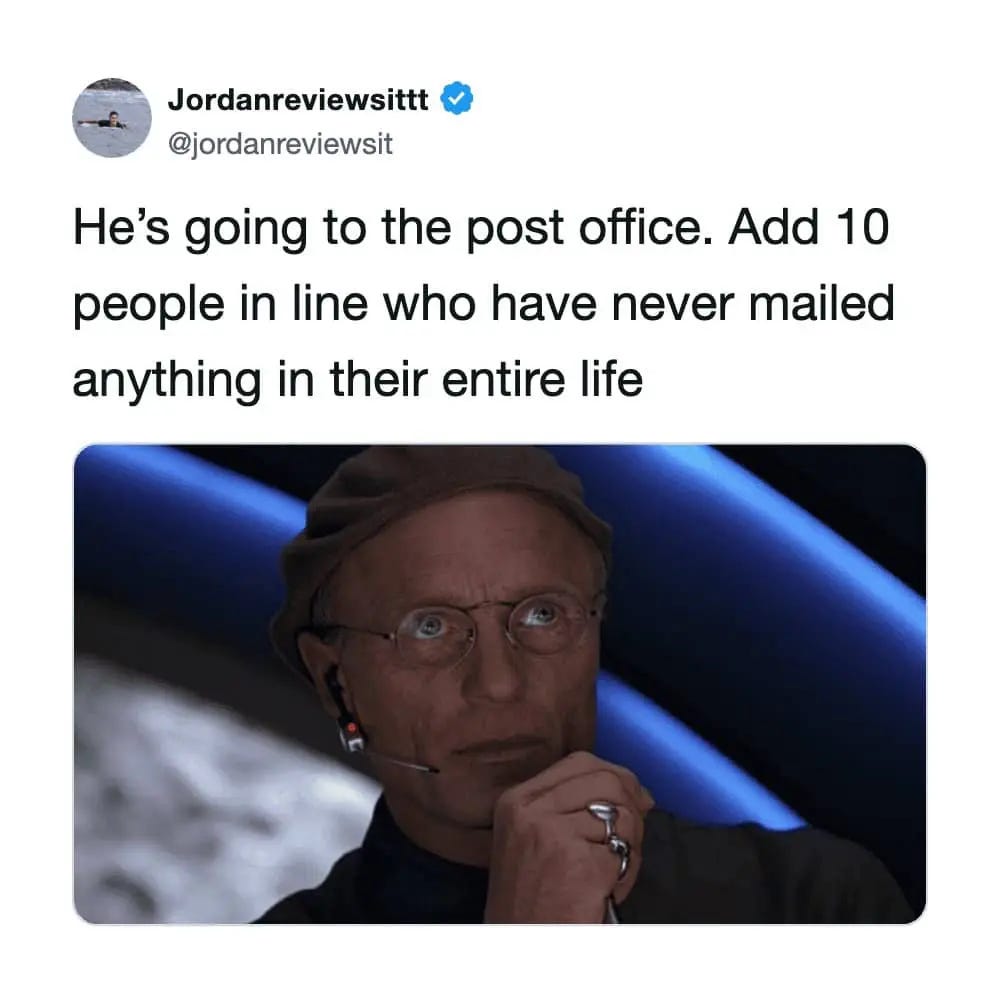
Going to work is starting to feel this way for many folks. As companies reverse course on being people-first, all while doubling or tripling down on AI investment, it feels like a rug pull that’s personal.
I’ve been working on some research, comparing what companies in the S&P 500 said in their 10-Ks in 2021 versus 2025. No shock that the language shifted, with 1 in 5 companies significantly pulling back language that focused on employee experience while amping up AI-focused language.
(BTW, one of the companies with the biggest shifts isn’t Silicon Valley tech at all. It’s Honeywell.)
These shifts aren’t unusual, even as AI feels like a more existential threat to folks we used to call white collar. In 1981 when Jack Welch took over GE, he spent his first four years ruthlessly cutting the organization down. Over 100,000 jobs from one company. All gone.
Industry Week called him “the most acclaimed SOB of the decade.” It was praise, not an insult. It shifted how companies managed people. Widespread downsizing worked its way across industries, even if there was no crisis. It was ruthless and probably a little coke fueled, perfect for the eighties.
Then in the 1990s, modern HR departments were launched. We started caring about the employee experience (before we knew what to call it). We invested more heavily in development, better recruiting practices, and the phrase “People are our greatest asset” spread faster than a cold at a daycare.
Did CEOs suddenly feel regret about downsizing as a workforce management strategy?
Probably not. Instead, the boom of the nineties created record low unemployment, skills gaps, and worker shortages. Demographics and economic success forced company’s hands. They had to be people first. People had choices.
That’s what I wrote about in this week’s Reworked column. While I don’t think we are doing a 90s repeat (which is too bad because I’d really like to see some of those bands again), there is something to learn here about how we get back to a more people-focused workplace.
Unfortunately, it’ll probably be because you’re in a competitive industry, a needed skill set, or we hit a level of demographic collapse that AI and automation can’t keep up with.
There are companies still living by the idea that people are their greatest asset but it’s not very cool anymore. But it will come back eventually. I think.
Take the Sapient Insights Group HR System Survey

Now nearing three decades, this report from Sapient Insights Group is one of my favorites to read and cover. It’s also a researcher’s dream. Decades of longitudinal data about the systems companies use to manage people, from the mainframe days, through SaaS, and now AI-led systems.
If you are familiar with your HR systems, I encourage you to take the survey and tell Stacey, Cliff, and the rest of the Sapient team what you’re currently doing.
What else is going on this week?
Road Report 2026: Workday Innovation Summit. Stacia Garr covers five bets Workday is making coming out of Innovation Summit, and the throughline is that the company believes its installed base and data depth are walls. Whether those hold against AI-first HCM challengers is a separate question from whether Workday believes they will.
The Case for a Four-Day Week: What the Research Shows. David Green hosts Joe O’Connor and Jared Lindzon to argue the question isn’t how to get more from people, it’s how to get more from the time people already spend at work.
Most Hiring Automation Stops at the Apply Button, Study Finds. 57% of organizations say they use automation agents in hiring; fewer than 1% have connected those tools into workflows that affect who gets hired. Jill Barth has it.
Human Capital Insider, May 2026. Kyle Forrest builds on the Deloitte HC Trends finding that only 7% of organizations are truly adaptable, which means 93% of them think they are.
‘Doomjobbing’ Can Hurt Your Job Search. The term was coined by an 8-year-old watching her laid-off parent scroll LinkedIn for hours. At this point a book would be an improvement.
Entry-Level Productivity Expectations Have Increased Due to AI, Report Says. 30% of HR professionals now favor hiring fewer junior workers, and 74% of those same organizations have no development programs to replace the on-the-job learning being lost. Efficiency win today, leadership gap in five years.
What’s Coming for Meta This Week. Francesca Ranieri coins “Sitting Duck Syndrome” for the 78,865 Meta employees who know something is coming, don’t know what, and can’t do much about either. Productivity is not the prediction.
Rebranding With Purpose. Pete Tiliakos and Amberly Dressler on rebranding in a category moving faster than the messaging, and they’re honest about what doesn’t work.
Amazon Employees Forced to Hit AI Quotas Immediately Start Using It for Everything Except Work. Amazon introduced AI usage leaderboards and workers responded by gaming their token counts for personal tasks, a practice now called “tokenmaxxing.” Mandating a behavior with a metric is a reliable way to hit the metric.
A New Labor Market Tracker at The Wrap. Mike Wood built a live unemployment tracker into The Wrap’s site, which is better than navigating the BLS directly.
Reserved, Coveted and Contested: Decoding the Office Parking Lot. Robin Schooling argues who gets the reserved spot tells you more about the culture than the values wall ever will, and she’s not wrong.
Kroger Facility’s Parking Lot Policy Violated Federal Labor Law, NLRB Judge Finds. An NLRB judge ruled a Kentucky Kroger distribution center unlawfully barred off-duty employees from the parking lot to solicit union support, and the HR rep made it worse by not telling the employee she could move to the sidewalk.
The Most Useful AI Use Case So Far. Meg Bear on using Open Brain for meeting prep and synthesis, and why the value only compounds once you’ve used it consistently enough to see the pattern. More practical than most exec posts on the topic.
Why AI-Obsessed Companies Should Care About the Aging Workforce. Workers 55 and older will account for more than 25% of the G7 workforce by 2031 while nearly every boardroom conversation is about AI and cost control. Dan Pontefract notes demographics do not care about your transformation strategy.
Why So Many AI Initiatives Fail to Launch. Kristy McCann on why so many AI rollouts never get off the ground, and the explanation is more structural than most organizations want to hear.
Who’s Your AI Bias Auditor? Bennett Sung frames bias audits as real data science work and walks through three pathways for who actually owns the function. Who you assign matters as much as whether you do it.
CHRO Confidence Hits Record Highs as Hiring Surges. The Conference Board’s CHRO Confidence Index hit a record 59 in Q1 2026, with 59% of HR leaders planning to increase hiring, and retention listed as the “persistent weak spot” that will most likely undo all of it.
TA Livestream Takeaways: The Humanity Premium in Hiring. As AI saturates the candidate experience, any moment with a real human has become the premium version, and most TA teams are cutting exactly those moments to fund their AI investments. Roberta Gogos writes it up from Lighthouse Research’s survey of nearly 2,000 candidates and hiring leaders.
The AI Access Axis: The New Dimension of SaaS Pricing. Kyle James on how AI is adding a new access axis to traditional SaaS pricing models. The pricing layer is where real access decisions get made, long before anyone frames it as an equity conversation.
The Million Dollar Sourcing Assessment. Balazs Paroczay argues watching a sourcer build a Boolean search in real time tells you more about their quality than reviewing their results. The gap between what teams think they’re doing and what they’re actually doing is expensive.
Kids Claim Child Labor Law Violations at Roblox. A class action alleges Roblox profited from the unpaid labor of minors, with the lead plaintiff claiming he worked 40-plus hours a week between ages 11 and 13 doing game design for adult-led teams with no wages. Yikes!
Have a great rest of your week!