


Welcome back to The Turn. Today’s story is very, very dumb. But selfishly, I hope you read it anyway.
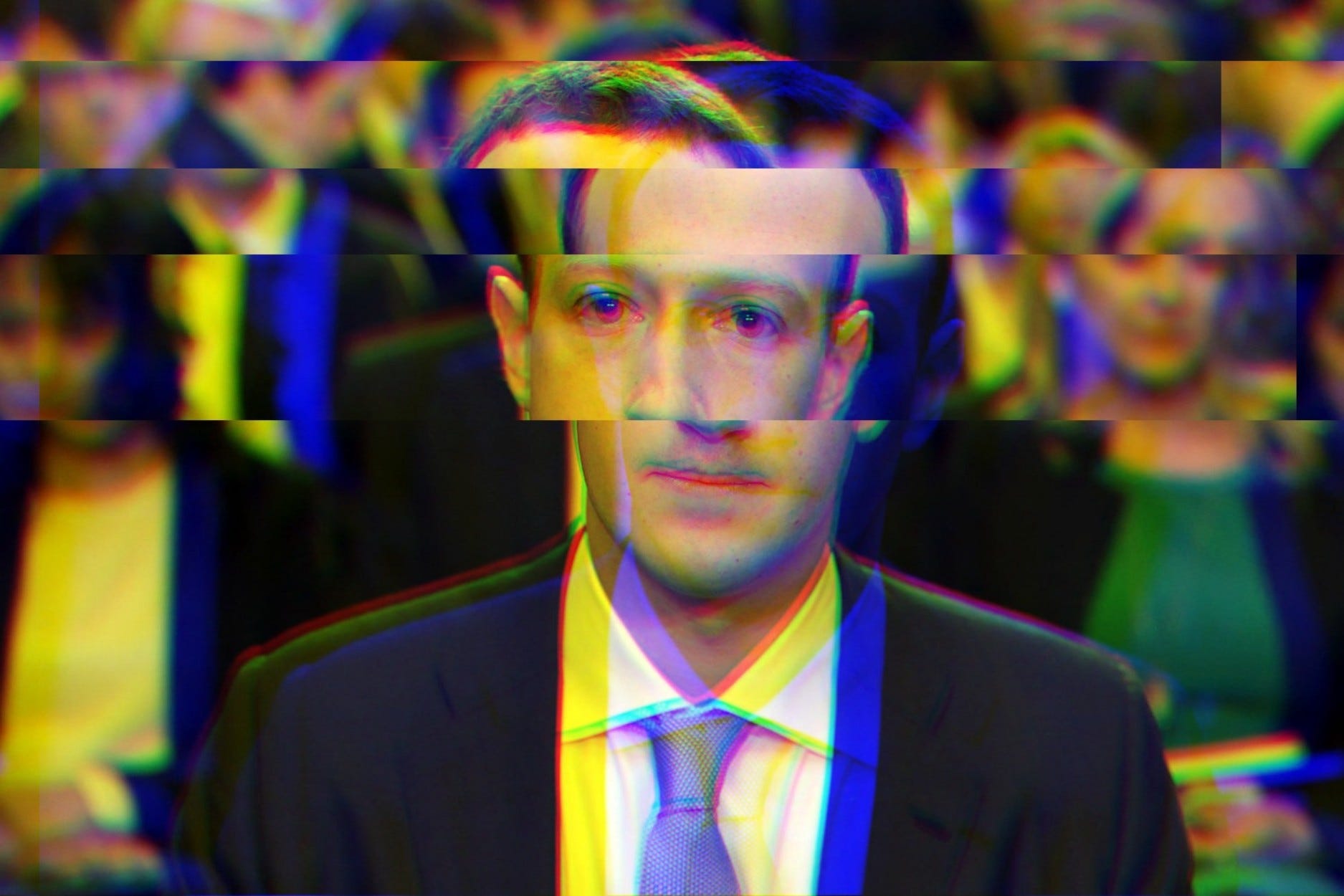
I wrote about Meta’s attempt to develop a photorealistic AI version of Mark Zuckerberg for Reworked. It’s kind of like the Tupac hologram that “performed” at Coachella a few years ago, but only if you like robotic technocracy instead of counter culture social commentary and sick rhymes.
Unfortunately, Zuck AI is built off of his human mannerisms and tone as well as public statements he’s made (including those made during earnings calls). Sounds captivating.
Of course, the company is investing in this initiative as they plan waves of layoffs starting in May (conveniently leaked out prior to its earnings call next week). Remember when layoffs indicated a company in trouble rather than one that investors flock to? Simpler times.
There are two issues here that are both simultaneously valid.
This is what Meta does
Meta sees a problem. Meta tries to solve it with technology first, seemingly unaware of the limits of how far a tech solution can take it. The Metaverse continues its slow collapse in spite of early promise. Workplace by Meta declined much more rapidly.
There’s not necessarily a flaw in the technology itself. Instead, what seems to happen is that Meta has a weird view on how people want to interact with and get from technology and spends ungodly amounts of money on the problem, only to eventually give up.
In that way, this approach isn’t unexpected. Meta has too many people to connect with their CEO in an authentic way. This weird stand in will certainly help, right?
It won’t. I don’t care how robotic and weird this dude is but he is who he is because of his humanity. This isn’t some Black Mirror episode where we can interact with someone’s essence. It won’t even be uncanny.
Let’s just hope they don’t spend another $70B+ on this one.
Connection is a legitimate challenge
And you know, I hate to give them credit, but the problem they’re trying to solve is a real one. Once you get beyond a certain size, connecting with employees as a CEO is just impossible. If Zuck spent every minute of a standard work week connecting with employees, they’d each get 90 seconds.
Think that’s bad? Walmart’s 2.1 million employees could bank on 3.5 seconds each. Hope you make a strong impression.
Which is why companies don’t try to do this at any sort of scale. They use sampling or focus groups and hopefully they don’t insulate a CEO too much from the real world problems. It’s why shows like Undercover Boss worked.
Most companies of that size have also figured out that the CEO isn’t even a great person to be connected to anyway. If you’re at Walmart, you’d probably rather be connected to your store manager or regional leader where decisions about your working life are more closely made. If you’re at Meta, you’d probably rather be connected to the senior leader of your department or your project team.
Please don’t do this
I don’t know why the folks at Meta think this is a good idea but it isn’t. I could make jokes for days about it, but at a time when thousands of people are being laid off by cold emails at 6 am, we need real human connection, not a synthesized version of it.
Trying to scale connection to the CEO will not work. It’s a dumb investment. I don’t want to ask an avatar for answers about my job or about the direction of the company I work for. I’ll talk to a human, any human, with some insight. And if it is just a video put together by humans whose job it is to communicate such matters, then that’s fine as well.
Did I say don’t do this already? Don’t do this.
Claude Design is live and it’s better and worse than I expected
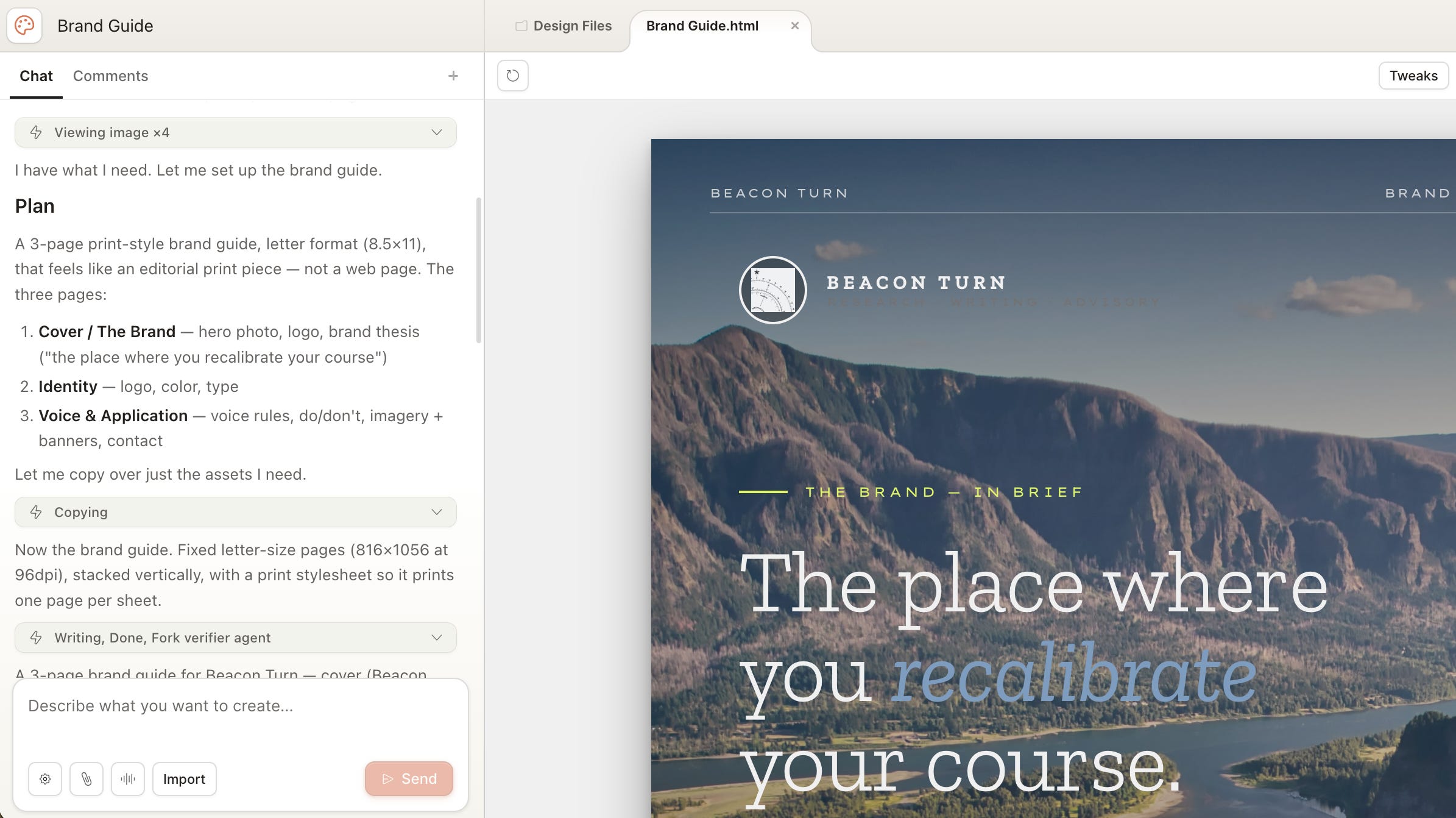
Claude Design launched and I played with it (and completely exhausted my usage for an entire week).
The TL;DR version is like all things AI: Highly capable in plausible execution, less so with specifics and production-level quality. It takes some work to get it in good shape and there will be some very well executed slop.
Apologies to all my designer friends who will be feeling the annoyance that folks in the coding and writing trades have been dealing with.
What else is happening this week?
Letting AI Do Your Work Erodes Your Confidence in Your Own Thinking. Passive acceptance is the key variable: the 1,923 adults who took AI answers without pushback reported weaker confidence and less ownership over their own ideas, while those who edited and pushed back came out fine.
The Hidden Cost of Frictionless AI. John Sumser reframes the cognitive dependency problem as “capability preservation,” which is more useful for organizations whose AI rollouts are producing faster but shallower work.
58% of Employees Plan to Search for New Jobs in the Next Year. Intent is cheap; the question nobody’s answering is what jobs these people are planning to land in, given how quickly the entry-level roles are being absorbed.
If AI Were a Woman. Jess Von Bank | Now to Next builds a more interesting piece than the premise promises, including a first-person detour into Claude’s Design app that does real field reporting alongside the philosophy.
How to Get Started with Claude Design. No mature design system, no clean results: that’s Brandon Giella‘s honest summary of a tool that works as a multiplier but not as a replacement for foundational design operations.
Early Talent in Peril: Can Work-Based Learning Solve the Entry-Level Career Crisis? Six percent fewer early talent jobs since 2022, twice as many applicants per opening, and AI absorbing the work that used to be the training ground: Alexandra Levit makes the data hit harder than the talking points from Unleash.
Writing from AI Defaults to the Mediocre Median. Jaclyn Schiff compares AI-generated LinkedIn content to Spotify’s recommendation bubble, and it’s a good one: algorithms optimizing for broad appeal produce content nobody asked for specifically.
The Religious Right Is Being Recruited for the AI Crusade. The argument that Christians have a moral obligation to embrace AI, pushed by Peter Thiel, Katherine Boyle, and Trae Stephens, is a more substantive strategic play than the headline makes it look.
HR Tech’s Moviephone Moment. Mike Wood launches a new site and opens with a Seinfeld reference, which is a strong editorial debut if you’re picking one cultural touchstone for where HR tech is headed.
Purple Acorn Network Partners with PodStar to Scale Founder Voices Across the Future of Work. Congrats to Evan White: 30,000 monthly listeners and a partnership that gives real global distribution to a platform that has already outgrown its original lane.
The Road to ERE: Part One. One of the better recruiting conferences on the calendar gets a preview, and Brian Fink‘s conversation with Ed Delgado on what sourcers actually need to do with AI is worth reading before Atlanta in May.
The AI-and-Jobs Convo Gets Real: Talking Layoffs, Brain Fry and the SaaSpocalypse. Steve Smith argues the real displacement story isn’t just jobs. It’s also the software those workers depended on. What happens when the middleware layer collapses and the management layer built to oversee it goes with it?
We Need to Do the Reps to Get Better as Talent Advisors. Working at something is still how you get better at it, and John Vlastelica‘s pushup analogy holds because talent advisor skills are built in actual conversations with actual hiring managers, not in training modules.
The Payroll Problems That Never Change. More than a dozen years since I’ve done payroll and Stacey Harris and Sapient Insights are surfacing the same core failures: integration gaps, customization limits, and systems that don’t talk to each other, just with newer logos on the vendors.
The Truth About California’s Fast Food $20 Per Hour Wage Law. Steve Boese reports that prices barely moved and job losses were modest, which dispenses with the main employer objections but leaves the more useful question open: when does this become a federal conversation?
How Webinar Transcripts Drive Search Visibility by Anchoring to 3 SEO Fundamentals. Bennett Sung makes the case that one webinar can become five focused search pages, and the core argument that raw transcripts are an underused asset holds even if you skip the SEO scaffolding.
Why AI Improves Employee Engagement for Some Organizations and How to Make It Work for Yours. Almost half of surveyed leaders report AI improved engagement while fewer than one in ten say it hurt. Those numbers look very different sitting next to the burnout and cognitive offloading studies published recently.
Have a great rest of your week!
Sentence 2 is worth $100