


“Hire by Google is the actual game changer recruiting needs.”
That’s what some idiot wrote in 2017 about an ATS launched by Google that would eventually only last about three years and change the game exactly nil.
Unfortunately, that idiot was me.
Welcome back to The Turn. Today, we’re chatting about tech giants that dabble in HR tech.
When you write for decades, you’ll inevitably have some misses. In my defense, it looked perfect for SMBs embedded in the Google ecosystem. I mean, this is what they launched with.
So it seemed really good, but it eventually (and, likely, inevitably) failed. It was a good lesson on when to balance nuance with a good, grabby headline. Maybe more importantly, it was also a lesson about software market dynamics, especially in HR technology.
Now a new tech giant thinks they have something to offer.
Last week, Amazon announced the launch of Connect Talent. It’s an AI-powered agentic hiring platform that conducts voice interviews, scores candidates on competency frameworks and hands recruiters a dashboard with transcripts and rankings. Amazon states it’s built on decades of the company’s own hiring science, and that it’s designed for employers who need to hire a lot of people fast.
My full analysis is on Reworked but after writing my column, the question I keep coming back to is a simple one: Why? Out of all the companies to copy a hiring playbook from, why would anyone in a high-volume hiring industry choose to copy Amazon’s?
From the outside, their high-volume hiring science looks more like something cooked up by Frankenstein. How do hires go from decision to onboarded to paid? At scale, those steps really matter if you want to do anything besides just make a better initial decision. And it really makes more sense when something like Connect Talent is embedded into a broader platform layer. Just ask Paradox. They already have real-life stories that Amazon wants to tell, too.
Also, what happens when Amazon figures out that selling HR tech at the enterprise level is a multi-year endeavor? At least Google was targeting SMBs with Hire, a market that often had less than a handful of decision-makers and incumbent technologies in-house. The change management alone at this scale won’t be fun for anyone.
That doesn’t mean Amazon is completely screwed. As an integration into existing hiring systems, it might make more sense to adapt what Amazon has built instead of building it yourself. And if you’re already developing on AWS infrastructure, it makes even more sense.
But hiring tech isn’t slowing down or waiting for Amazon. Ultimately, it still might go down as more successful than Hire or the Fire Phone. That’s not a high bar to cross though.
AI talent infrastructure is still catching up
How hard is it to find AI talent? Your view likely depends on where in the org chart you sit. New research from my friends at X-Team shows company leadership is super confident in their abilities to bring in AI talent. The people closer to where those people operate? They aren’t as sure.
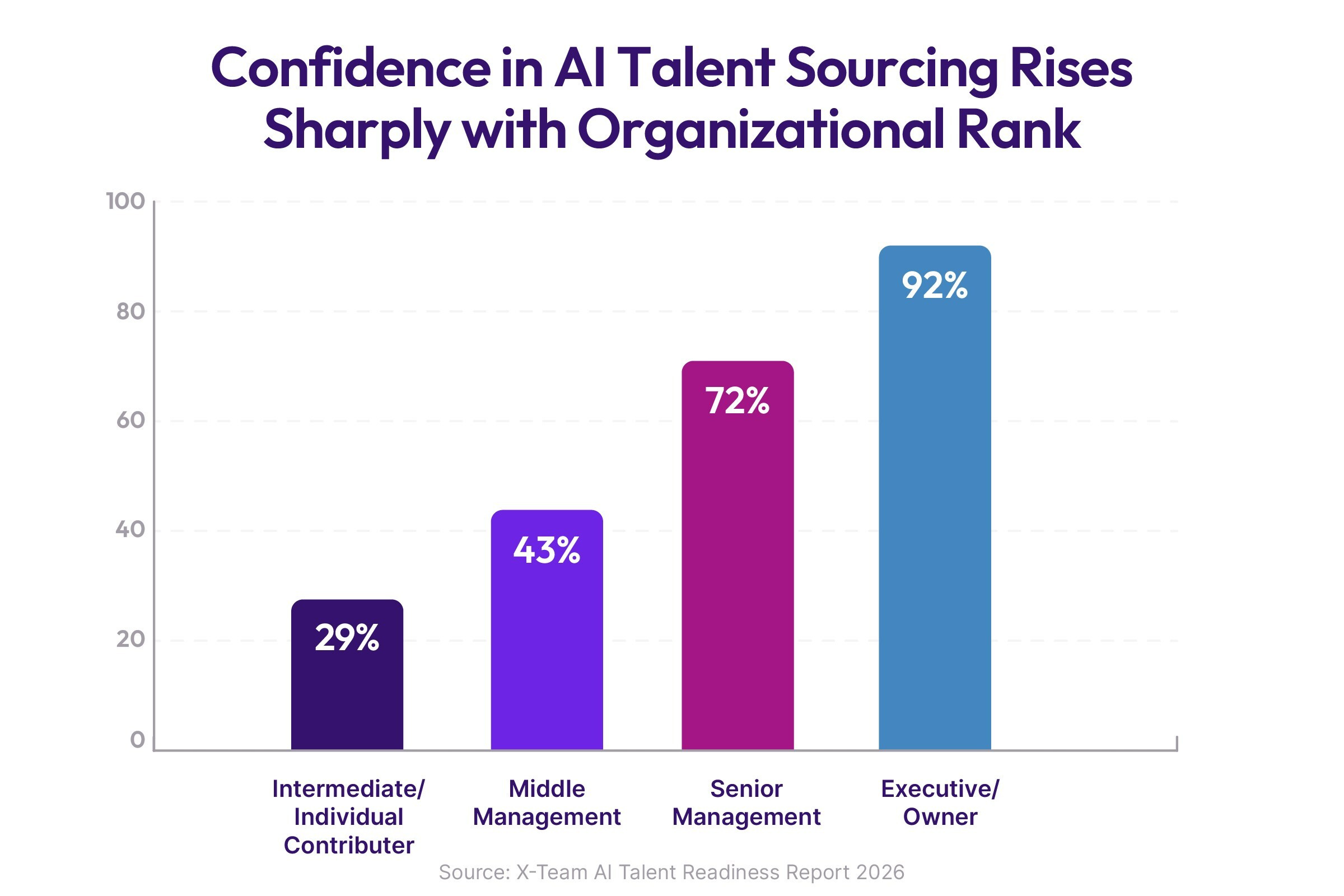
While focused primarily on AI development talent, we are going to see the same trends as other functions adapt AI. Projecting high confidence from leadership while taking a sort of fake-it-as-you-make-it approach on the ground has a short expiration date, though.
The report also goes into my annoyance: Governance in name only, even for those concerned about governance risks.
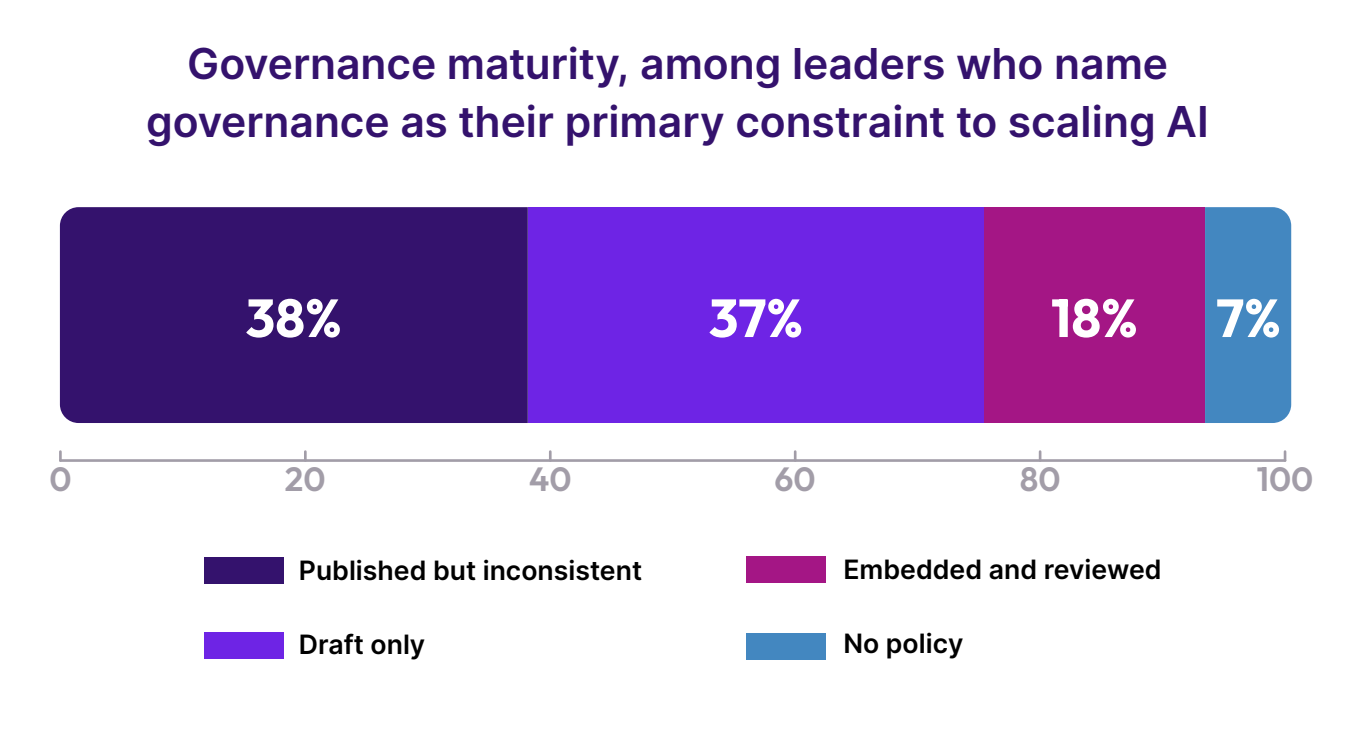
If you are hiring AI talent, this is a good one.
What else is happening this week
The Best HR & People Analytics Articles of April 2026. David Green has the sit-down reading for April, and the frame he opens with earns the whole list: this is less a test of technology than a test of leadership.
The Definitive Guide to AI Adoption in Talent Acquisition. AI is everywhere in hiring, impact is not. Madeline Laurano finds most organizations have moved quickly across TA but are still running isolated use cases and calling it transformation.
Atlassian Adds AI Enablement to Its People Strategy. Atlassian created a Chief People and AI Enablement Officer role, and put Avani Solanki Prabhakar in it. Unlike most announcements of this kind, the structural commitment here suggests someone might actually be doing this right.
HR Tech Confidence Check, Spring 2026. Mercer’s spring check finds the same gap that has been there a while: shifting from simple investment to strategic alignment is still the move most HR teams have not made.
Voice Is the New Interface. Greenhouse Just Made Its Move, Acquires Ezra AI Labs. George LaRocque talked to Greenhouse CEO Daniel Chait after the acquisition, and the bet is simple: voice is about to become the default hiring interface, and this is Greenhouse staking its claim early.
Recruiting Brainfood, Issue 499. Hung Lee is one away from 500, and 499 does what you would expect from someone who has kept this going long enough to include a serious essay on organizational sense-making alongside the usual links.
Somewhere Over the Atlantic, I Figured Out Why AI Adoption Is Broken. Always good to get a Jason Averbook update from 30,000 feet, and this one lands on something that isn’t just a runway: the technology is not broken, the system it was dropped into was never designed to be trusted in the first place.
Workday and A16z. Thomas Otter offers some comments on the comments about Workday, and there is enough signal here that piling on with more observations would just get in the way. Just read it.
Is the Workday Debate Really About Workday?. Steve Smith argues that anyone working in enterprise software should take this debate personally, because the real question it keeps circling is about the whole category, not the company.
Ep 790: Rethinking Work in the Age of AI. Matt Alder and Stacey Harris talking is reason enough to listen, and the topic, what AI is actually doing to work and what the vendor landscape is supposed to do about it, gives the runtime something real to cover.
Ethical HR Leadership. Laurie Ruettimann has a LinkedIn Learning course on ethical HR leadership, and the fact that she has to preempt the joke about whether that is an oxymoron tells you something about where the field is right now.
Hurtful, Honest, or Helpful. Craig Hepburn gets closer than most to naming what the AI-and-jobs argument keeps skipping: the actual space between disruption and displacement, and what is happening there.
A New Way of Entering the Job Market. John Sumser calls it a draft advice note, which is the honest label for a moment when the rules for entering the job market are still being written.
2026 RedThread Megatrends. Stacia Sherman Garr maps the five forces reshaping work, and the one that anchors the whole thing is this: they are bigger than either HR or the business, which means both sides need to stop acting like they control the outcome.
I Just Launched the AI Pledge for Humanity. Here’s Why. AI leaders keep saying UBI is necessary, and Scott Santens puts out the call for them to actually prove it with real commitments, which is a reasonable test of whether the consensus position is a belief or a talking point.
HR Snacks To Go: Kyle Forrest at Deloitte, Transform. Joel Stupka and Kyle Forrest run through the AI-plus-human equation in ten minutes, and the case they make for multiplication over addition is worth the quick listen.
The Platform You Bought in 2021 Was Built for a World That No Longer Exists. Mike Wood’s counterpoint is worth the read: the TA software market has already had its Napster moment, not the slow-moving kind where incumbents get years to adapt, and the progress worth tracking is the kind that does not wait for them.
5 Lessons for Early-Stage B2B Brands. I got to talk to Bennett Sung about what he was building before he put it in writing, and what he is sharing here, category building, AI-augmented marketing, founder-led GTM, is the kind of playbook people usually keep to themselves.
I-O Psychology and Predicting the Future. Gabby Burlacu comes out of SIOP with a concern worth talking about: what industrial-organizational psychology knows about where work is going and what organizations actually apply are two very different things, and the gap between them is addressable.
Informed Does Not Mean Intelligent: Workforce Analytics and the Under-Appreciated Value of Context. Steve Hunt draws a hard line between informed and intelligent in workforce analytics, and the argument is that organizations calling data outputs intelligence are creating blind spots they do not know they have.
Why Trust Is the Defining Asset of 2026. Three numbers from a Fast Company piece stopped Kristy McCann Flynn mid-read, and the case she builds around them, trust as the asset most companies are not measuring, is one worth thinking about.
Have a great rest of your week!